"I Was Only Dreaming"
Concept
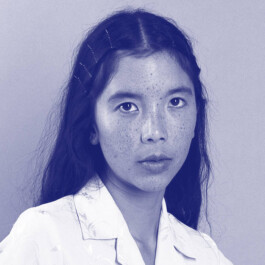
Abstract „I was only dreaming“
I Was Only Dreaming (working title) is a contemporary experimental audio-visual experience. Inspired by ~~~ (Leaving Records, 2019), the critically acclaimed album by Ana Roxanne, this project offers an immersive, durational audio-visual experience that abandons linear narrative in favor of personal associations and dream-like emotional landscapes. It is an open, inclusive, and contemporary form between theatre, opera and installation that welcomes audiences into the heart of the performance. Instead of a frontal stage, the audience sits within the space, surrounded by musicians, singers, and performers who move around them. Boundaries between audience and performers dissolve, creating an evolving sonic and visual environment.
The piece blends live classical instruments with Roxanne’s ambient soundscapes, electronic textures, and field recordings. It encourages deep listening and immersion. The aim is not to tell a story in a linear sense, but to create a space where audiences can dream, reflect, and encounter new forms of musical expression.
I Was Only Dreaming is currently in development and seeking institutional partners, venues, and supporters to co-create this ambitious work.
What is it?
With I Was Only Dreaming, we aim to create space for a collective, inclusive audio-visual experience— one that invites people in, encourages them to let go, and immerses them in what unfolds around and within them. The goal is to leave a lasting memory of a positive audio-visual experience – what can be described as emotionally intelligent. It can be described as an opera, as a theatre piece, or a living installation. The context, in which it is presented, defines what medium it leans towards to.
I Was Only Dreaming is a project conceived by me and to be realized in close collaboration with Ana Roxanna and the creative team at the hosting venue, this work is an immersive, artistically ambitious response to the evolving possibilities of audio-visual experiences.
Why This? Why now?
One of the core questions at the heart of this audio-visual experience is: How do we want to live as a society today? Roxanne’s music, which challenges binary thinking—between human and non-human, natural and synthetic, intimate and universal—offers a powerful framework for exploring this. Her sonic language is both confrontational and comforting: it invites audiences to reflect, drift, and imagine. It allows for a space in which individual, even utopian, visions of the world might emerge.
I Was Only Dreaming aims to inhabit different spaces and function as a vital medium for contemporary thought and social imagination. Through sound, space, and collective presence, it invites the audience to ask: What kind of world do I want to live in? What values matter now? I Was Only Dreaming offers a compelling vision for where it can go—toward inclusivity, fluidity, and audience engagement. It is an invitation to dream beyond established forms, to create space for new voices, and to reimagine what music theater can be in our time.
Ana Roxanne
Ana Roxanne is an American musician based in New York. Her self-released EP was later reissued by Leaving Records before signing with Kranky for her official full-length debut, 2020's Because Of A Flower. Working at the interzone of electric meditation, dream pop, and ambient songcraft, her inspirations span the secular (R&B divas of 1980's and 90's) and the spiritual (Catholic choral traditions in which she was raised), synthesized into a uniquely intuitive sonic language, equal parts atmospheric and ancient, healing and hermetic.
Thematically, her works often explore themes like self-constitution and gender identity. The musicologist Victor Szabo writes about Roxanne’s in his monography «Turn On, Tune In, Drift Off: Ambient Music’s Psychedelic Past»: «Roxanne’s personal narrative around her music, divulged in a series of interviews, further connects her music to a project of self-exposure, particularly with regard to her coming-out as intersex and revealing, through sound, a subjectivity exploring gender expressions.»
Where do we go from here – the Process
The project is in development and actively seeking partners. We are looking for:
Institutions, festivals, or venues that can host the work and contribute to its production budget.
Creative collaborators: musicians, stage designers, choreographers, and technical experts who can help realize this immersive vision.
Together with Ana Roxanne and our future collaborators, the work will be developed in close dialogue with the hosting institution and adapted to the specific spatial and social contexts.
Music
The musical foundation of I Was Only Dreaming is Roxanne’s ~~~, an album that breaks traditional song structures to evoke dream states. Using synthesizers, arpeggios, field recordings, and her voice, Roxanne creates rich sonic textures that will be expanded for the live experience.
This project focuses on texture, repetition, and immersive soundscapes and de-contextualized texts. Musical elements will be stretched, reworked, and spatialized to guide the audience into a hypnotic,
timeless experience. The libretto will draw directly from the non-linear, associative texts of Roxanne’s work, allowing space for individual interpretation and emotional projection.
Ambient music’s inherent fluidity allows the work to merge with its environment—making no strict separation between music and space, between foreground and background. This dissolving of binaries is central to Roxanne’s work and to the social and artistic inclusivity of the piece.
The audience will also take on an active role within the performance. At certain moments, each audience member will be given a small speaker. These portable speakers play individual sonic elements—seven groups of speakers broadcast seven slowly evolving compositions, each built from single notes.
As these tones interact with the live ensemble’s music, the audience is invited to move through the space and listen for harmonies that emerge when different speakers come together. The goal is for participants to discover musical connections with others in the room, literally tuning in to the resonances that form between them. In this way, the audience not only inhabits the sonic environment but actively shapes it, finding musical kinship through movement, chance encounters, and attentive listening.
Text / Story
The texts from "~~~" serve as the libretto for "I was only dreaming." In terms of content, they are non- linear and non-narrative, making them suitable source material for a corresponding music theater experience. Roxanne primarily explores self-constitution and gender identities on a textual level: "~~~" is both highly personal/intimate and universal. The detached, associative text passages serve as projection surfaces for the audience's own thoughts and emotional worlds. The focus is on individual experiences in medias res, rather than a unified, linearly constructed story with a fixed plot. The vocal melodies are retained but can be arranged for the choir.
Example Text „Immortality“
I was only dreaming
A past encounter resurfacing From deep violet water
I was only dreaming
A familiar gesture misplaced in time I was only dreaming
Of something I left behind
Things that accord in tone vibrate together
Things that have affinity in their inmost natures seek one another
Stage / Audience
There is no fixed seating and no frontal stage. Instead:
• The audience is free to move or rest on a specially designed carpet and flexible fabric structures at the center of the space.
• Performers and musicians move around the audience, engaging them from all sides.
• Sound sources, including audience held speakers, create individualized listening experiences
while also contributing to a shared, immersive soundscape.
• The visual design blurs the boundary between scenic elements and audience space.
Each performance is designed for 300–400 participants, fostering intimacy despite the scale.
I aim to bring this production to opera houses, theaters, and white cube gallery spaces alike. The reason is simple: the institution shapes the context and perception of a work. When you see a piece in an opera house, it’s framed as opera; in a theater, it’s perceived as theater; in a museum, it becomes part of an exhibition. By presenting I Was Only Dreaming in different kinds of spaces, the work takes on new meanings for different audiences. Its identity remains fluid—shifting and adapting to its environment, just like the music itself.
Target Audiences
I Was Only Dreaming speaks to:
Traditional music theater audiences open to experimental formats.
Fans of contemporary electronic, ambient, and experimental music.
Queer and gender-diverse communities, resonating with Roxanne’s exploration of identity.
Academics and students in musicology, gender studies, and performance studies.
Institutions seeking to present genre-defying and inclusive audio-visual experiences.
Context Ambient Music
Ambient music has its origins in the environmental music of the 1970s, a genre that is heavily engaged with the discourse of human/environment. On one hand, this occurs in the engagement with nature itself: the decelerating effect of the music genre aims to strengthen awareness for a more sustainable approach to natural resources. Ambient music also deals with the environment of the listening experience itself: the music merges with the environment, making a distinction between foreground and background obsolete—both musically and visually. In the context of "I was only dreaming," the environment of the venue is therefore not just seen as a passive performance space but is staged as a significant parameter of the piece, thus acting as an active agent in generating meaning. A well-known early work of ambient music is Brian Eno's album "Ambient 1: Music for Airports" (1978). Eno composed this work specifically for Cologne Airport to make the stay in the terminal more pleasant. According to Eno, the album should "induce calm and a space to think" while being "as ignorable as it is interesting."